July 2, 2026
ELM Applauds MA Senate Bill Aimed at Reducing Energy Bills and Protecting Climate Progress
July 2, 2026 – Yesterday, the Massachusetts Senate passed S.3143, An Act relative to energy affordability, clean power and economic competitiveness, a sweeping bill that focused on reducing energy costs for residents and businesses.
ELM applauds the Senate for advancing solutions that serve communities, protect our environment, and lower costs for residents. ELM’s team worked with senators to build support for policies that reduce energy bills, accelerate the clean energy transition, and prevent continued spending on unnecessary fossil fuel infrastructure.
ELM and our allies particularly focused on demonstrating the broad impact of investments in Mass Save, the Commonwealth’s energy efficiency program. By reducing building energy use and overall grid demand, it lowers energy bills for everyone, not just for the households and businesses who participate.
“Clean energy is affordable energy, and the Senate’s affordability package recognizes we do not have to choose between lowering costs and advancing our climate goals,” said Casey Bowers, Executive Vice President for Government Relations at ELM. “By protecting funding for Mass Save, reining in utility overspending, and increasing ambition for clean energy deployment, this proposal would deliver real relief for residents while moving Massachusetts toward an affordable clean energy future.”
ELM’s successful advocacy resulted in a Senate proposal that:
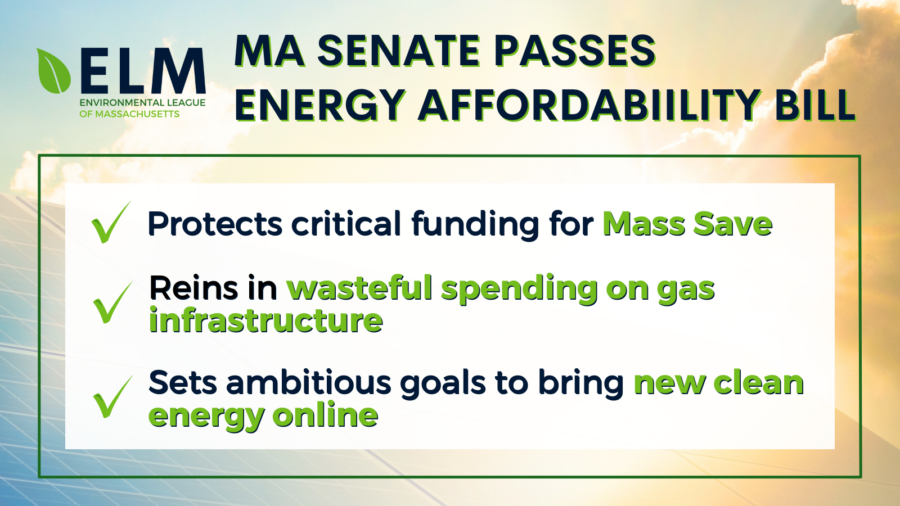
- Protects funding for Mass Save while reducing unnecessary administrative functions by removing gas utilities from program oversight
- Sets ambitious goals to bring new clean energy online, including 10GW each of solar and offshore wind, along with new incentives for energy storage
- Plans to phase out the Gas System Enhancement Program, an outdated gas pipeline cost recovery program that drives unnecessary spending
- Reduces utility costs by creating new finance mechanisms and spreading the cost of major energy investments over time
- Makes it easier for municipalities to build solar projects and requires automated permitting for residential solar
- Protects residents, communities, and natural resources where data centers are proposed, ensuring that tax credit recipients do not increase electric bills or degrade water resources or air quality
ELM thanks the many senators who stood as climate leaders through the process, particularly Senate President Karen Spilka, Chair Michael Rodrigues, and Chair Michael Barrett for their role in crafting an ambitious and comprehensive bill. We are also grateful to the work of Senator Comerford, who was instrumental in securing an amendment to investigate utility profit margins, Senator Howard, who strengthened community protections for data center siting, and Senator Fernandes, who fought to support offshore wind host communities.
ELM looks forward to working with both the House and Senate as they reconcile the bill in Conference Committee. As a result, we aim to help craft final legislation that keeps Massachusetts on the path to a cleaner, more resilient, and more affordable future for all.